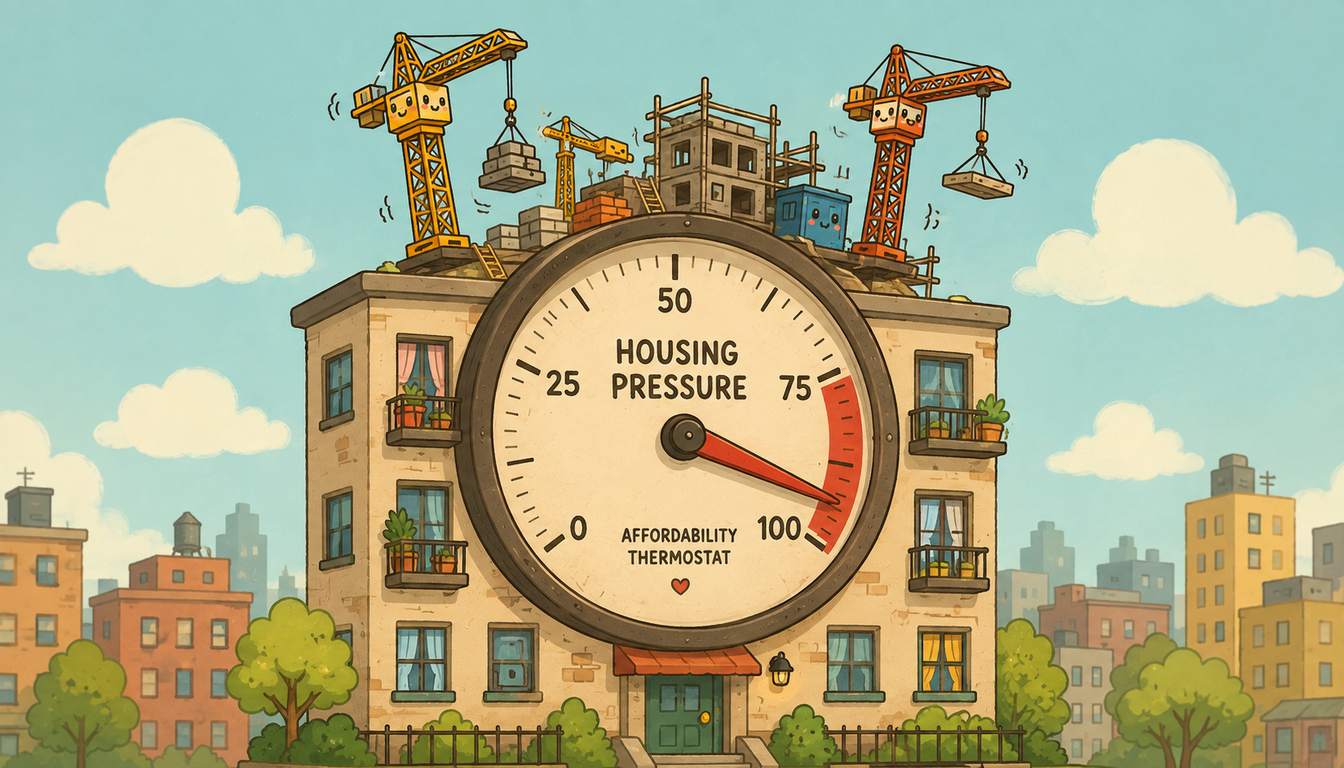

This week brought major developments for affordable housing across the United States. New apartment communities are moving forward, California and New York are considering ways to build housing faster, federal agencies are working to reduce delays, and lawmakers are looking at rules that affect construction costs.
At the same time, new data shows that extremely low-income renters continue to face a serious shortage of affordable homes. These developments highlight the need for both new housing and programs such as Section 8 Housing Choice Vouchers that help households afford rent.
Here are the most important affordable housing stories from the past week.
New Affordable Housing Breaks Ground in La Mesa
Construction is moving forward on Spring View Apartments, a 147-unit affordable housing community in La Mesa, California.
The $106 million development will include studios and one-, two-, and three-bedroom apartments for individuals, families, and veterans earning between 30% and 60% of the area median income.
The new affordable housing development in La Mesa will also be located next to the Spring Street trolley stop. Building affordable homes near public transportation can help residents reach jobs, schools, health care, and other services while reducing transportation costs.
California Voters Consider Major Affordable Housing Investments
Housing funding is receiving significant attention in California.
In San Francisco, Proposition C would more than double the amount the city puts into its Housing Trust Fund each year. The fund helps finance affordable housing construction, rehabilitation, land purchases, emergency repairs, and programs that prevent eviction and foreclosure.
Supporters of Proposition C and affordable housing funding say a larger and more stable source of funding could help the city continue housing projects when other sources of money become less available.
California voters will also consider Proposition 1, which would authorize $11.25 billion in bonds. Of that amount, $10 billion would support affordable housing and related infrastructure, while $1.25 billion would go to the CalVet Home Loan Program.
According to KQED’s overview of Proposition 1 and affordable housing, state estimates indicate that the funding could support as many as 40,000 rental units and help up to 40,000 families purchase homes.
Airbnb Invests in Housing Development
Airbnb announced an initial $250 million investment in a Housing Accelerator designed to help housing developments that have secured most of their financing but still need additional funding before construction can begin.
The company says the program could help unlock more than $5 billion in housing development over the next decade.
In Florida, Airbnb is also partnering with the Florida Housing Coalition. One project highlighted in Airbnb’s affordable housing investment in Florida is Rome Yards in West Tampa.
The first phase will include 234 affordable and workforce housing units. The full development is expected to have about 954 homes, with nearly three-quarters planned as affordable or workforce housing.
Lowest-Income Renters Face a 7.2 Million-Home Shortage
National data shows why increasing the supply of affordable homes remains urgent.
The National Low Income Housing Coalition reports a shortage of approximately 7.2 million affordable and available rental homes for extremely low-income renters.
There are only 35 affordable and available homes for every 100 extremely low-income renter households. About 74% of these households spend more than half of their income on housing.
The national affordable rental housing shortage affects every state and major metropolitan area.
The findings also highlight the role of Housing Choice Vouchers, public housing, and other assistance programs. Increasing supply can help, but many extremely low-income households still need rental assistance to afford a home.
Portland Considers Permanently Affordable Housing
Portland, Maine, is exploring a different model for creating affordable homes.
A city task force is considering mixed-income housing that would remain affordable over the long term. The proposal could help workers such as teachers, firefighters, and police officers who may earn too much for some traditional housing assistance but still struggle with local housing costs.
The Portland affordable housing proposal includes two possible pilot projects. One could create about 40 mixed-income rentals on city-owned land. Another could involve the city financing and owning units within a Portland Housing Authority development.
California Approves New Housing Laws
Several new California laws focus on making affordable housing easier to build or preserve.
San Francisco officials welcomed a new state law aimed at making affordable homes easier to build. Reducing delays and costs can be especially important for affordable developments that depend on limited public funding.
Another measure, AB 2020, focuses on protecting existing housing. The law gives affordable housing developers more flexibility to use resources from existing properties to stabilize developments facing financial problems. Supporters of the California affordable housing preservation law say it could prevent affordable properties from being lost through avoidable foreclosures.
Governor Gavin Newsom also signed AB 2433, the Affordable Homeownership Bonus Law. The new affordable homeownership law in California changes density bonus rules to encourage affordable homeownership developments and simplify approvals.
Together, the measures address both sides of the housing supply problem: creating new affordable homes and protecting existing ones.
HUD and USDA Work to Simplify Housing Development
HUD and the U.S. Department of Agriculture signed an agreement aimed at simplifying federal housing requirements.
The agencies plan to coordinate standards involving environmental reviews, inspections, and other parts of the development process.
The HUD and USDA affordable housing agreement is intended to reduce repeated work and make it easier to move housing projects forward, particularly in rural communities.
Federal officials hope that reducing delays will help lower costs and increase housing supply.
Ranking Highlights More Affordable U.S. Cities
Housing costs vary widely depending on location.
A recent MoneyLion ranking identified 50 U.S. cities where housing remains relatively affordable. Nearly half of the communities were on the East Coast, with Lynchburg, Virginia, and Dundalk, Maryland, among those receiving high rankings.
The list of U.S. cities with more affordable housing shows how much housing costs can vary around the country.
However, lower overall housing costs do not necessarily mean there are enough rentals for extremely low-income households. Even lower-cost communities can have shortages of deeply affordable housing.
Louisville Affordable Housing Project Nears Completion
Louisville, Kentucky, continues to invest in housing and neighborhood improvements in the Russell neighborhood.
The area has received major public and private investment aimed at creating mixed-income housing, improving existing properties, and expanding opportunities for residents.
The latest affordable housing investment in Louisville’s Russell neighborhood shows how affordable housing can be part of a larger neighborhood redevelopment effort rather than a stand-alone project.
Thousands of Pennsylvania Affordable Rentals Could Be at Risk
Preserving existing affordable housing is becoming another major concern.
A Pennsylvania Housing Finance Agency study found that affordability restrictions on more than 43,000 federally supported rental units could expire within the next decade. That represents about one-third of the state’s existing federally supported properties.
The Pennsylvania affordable rental housing study also found that more federally assisted units are approaching the end of their affordability requirements than are currently being added through federal subsidies.
Pennsylvania plans to launch an Affordable Housing Preservation Tracker in 2027 to help identify properties where affordability may be at risk.
Los Angeles Could Add Nearly 200 Affordable Homes
A vacant property at Wilshire and Crenshaw boulevards could become a 196-unit housing development.
The project would include 194 income-restricted apartments plus two manager units. Homes would serve households earning between 30% and 60% of area median income.
The proposed affordable housing development at Wilshire and Crenshaw would offer one-, two-, and three-bedroom apartments along with community areas and other amenities.
The property belongs to Metro, which aims to create 10,000 homes on transit-owned land by 2031, including at least 5,000 income-restricted homes.
Bipartisan Bill Targets Affordable Housing Construction Delays
Senators Angus King of Maine and John Curtis of Utah introduced the Build American Efficiency Act, a bipartisan bill aimed at reducing delays tied to federal construction requirements.
Affordable housing developers can face difficulties determining whether individual construction products meet Build America, Buy America requirements.
Reporting on federal requirements affecting affordable housing construction shows how these rules can create delays for some projects.
The bipartisan affordable housing bill from Senators King and Curtis would allow HUD to recognize reliable systems that identify qualifying American-made products.
Senators Lisa Murkowski and Peter Welch are also supporting the legislation. Murkowski’s support for the affordable housing bill is especially relevant for places such as Alaska, where construction costs and limited access to materials can make housing more expensive.
Could AI Help Build Housing Faster?
Artificial intelligence is also entering the housing discussion.
The Bipartisan Policy Center will hold an October 13 event examining how AI could help during different stages of housing development.
The Housing Innovators event on AI and affordable housing will look at possible uses involving zoning analysis, architectural design, construction monitoring, and purchasing materials.
AI cannot replace housing funding or rental assistance, but technology that reduces development time or costs could become another tool for increasing housing supply.
New York City Fast-Tracks Affordable Housing in 12 Areas
New York City has selected 12 community districts for its Affordable Housing Fast Track program.
Together, these districts represent about one-fifth of the city’s community districts but produced only 883 of New York’s 63,870 new affordable homes during the past five years.
Under the New York City Affordable Housing Fast Track program, qualifying projects will be able to use a 90-day public review process starting in January 2027 instead of a process that can take about seven months.
Additional coverage of New York City’s affordable housing fast-track plan highlights the city’s focus on neighborhoods that have produced relatively little affordable housing.
The list of eligible districts will be recalculated every five years.
Where Section 8 Fits Into the Picture
Many of this week’s announcements focus on increasing housing supply, but building new apartments takes time. Some developments announced today will not be ready for residents for several years.
For households struggling with rent now, Section 8 Housing Choice Vouchers and other rental assistance programs can provide important support. Availability varies by location, and many housing authorities have waiting lists.
Households facing an urgent housing problem can review our step-by-step guide to applying for emergency Section 8 housing assistance to understand available options and where to start looking for help.
It is also important to remember that a new affordable housing development does not automatically mean that new Section 8 vouchers or waitlist openings are available. Each property and housing program has its own eligibility requirements and application process.
What This Week’s Affordable Housing News Means
This week’s news shows that communities are approaching the affordable housing shortage from several directions.
New projects are adding homes in places such as California and Kentucky. California is also changing rules and considering major investments, while New York City is shortening approval times in neighborhoods with low affordable housing production. Portland is exploring permanently affordable mixed-income housing, and Pennsylvania is focusing on protecting affordable rentals that could otherwise be lost.
At the federal level, HUD and USDA are working to simplify housing development, while lawmakers are proposing changes intended to reduce construction delays.
But the national shortage remains severe. With only 35 affordable and available homes for every 100 extremely low-income renter households, building and preserving affordable housing will need to happen alongside Section 8 Housing Choice Vouchers, public housing, and other rental assistance programs.
Together, this week’s developments show the two major challenges facing affordable housing: creating more homes for the future while helping low-income renters find and keep housing today.
Navigating the Section 8 housing process can feel overwhelming, and that's where Section 8 Search comes in. We're more than just a listing website; we're a dedicated resource designed to make finding housing under the Housing Choice Voucher Program straightforward and stress-free. Our platform offers user-friendly tools to explore listings and waiting list statuses nationwide, all built on official HUD data. We're also passionate about providing clear, helpful information and guidance, empowering you with the knowledge you need to understand eligibility, complete your application, and confidently navigate your housing journey.