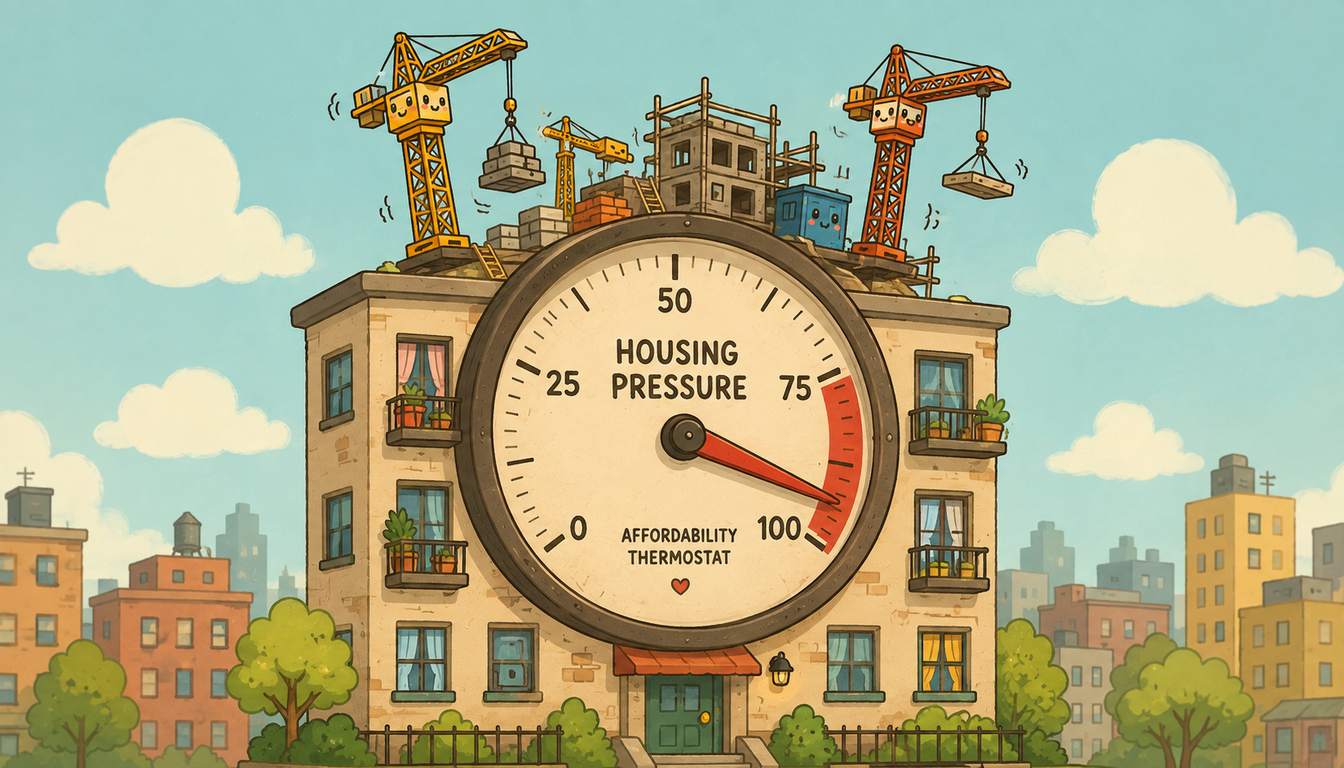

New affordable homes broke ground, opened, or got fresh funding across the country this week, and lawmakers from both parties are backing new ideas to help. Mortgage rates did cross 7%, which makes buying harder, but that is pushing even more attention toward affordable housing and Section 8. Here is what happened this week and what it could mean if you are looking for help paying rent.
More Vouchers for Families With Young Kids
A Democrat and a Republican in the Senate are teaming up on rental help. On September 16, Senators Chris Van Hollen and Todd Young brought back a bipartisan bill to create 250,000 new housing choice vouchers, according to the National Low Income Housing Coalition. The vouchers would go first to pregnant women and families with children under 6 who have been homeless, are at risk of losing their home, or live in areas with a lot of poverty. Families would also get counseling to help them move to neighborhoods with strong schools and good jobs. The bill still has to pass Congress, so nothing changes yet for people on a waiting list.
Money to Fix Older Buildings
Another new bill focuses on the homes we already have. Congresswoman Shontel Brown, Senator Lisa Blunt Rochester, and Congressman Carlos Gimenez introduced a plan for federal loans to repair HUD-assisted affordable housing. The loans would carry a 1% interest rate over a 30-year period in which the rents must stay affordable. The lawmakers point to a national shortage of 7.2 million affordable rental homes. They say repairing old buildings is one way to keep that number from getting worse. They also point to Cleveland's Rainbow Terrace, an apartment complex with long-running problems.
You can see what repairs can do in Troy, New York. Governor Kathy Hochul announced that a $152 million public housing renovation is finished, covering 341 apartments across four buildings. The homes are for households earning up to 60% of the area's median income. Residents got new kitchens, bathrooms, flooring, and heat pumps that should cut energy use by more than 20%. Families who lived there before the work began were allowed to move back without a rent increase.
New Homes Near Transit, Health Care, and Seniors
Several new buildings moved forward this week. In La Mesa, California, San Diego County broke ground on Spring View Apartments, a 147-home affordable housing development next to a trolley line. The county is adding 40 project-based vouchers, which include 36 Section 8 vouchers and 4 vouchers for veterans. These vouchers stay with the building, which helps keep rents low for years. Apartments are for people earning between 30% and 60% of the area's median income.
In Milwaukee, a ribbon cutting marked a first-of-its-kind affordable housing development in the Uptown neighborhood. The Phoenix Residential Apartments have 31 homes. Twenty-one are affordable apartments. The other 10 are short-stay rooms for Aurora Health Care patients who need a safe place to recover before moving into permanent housing. Milwaukee County put in more than $1.3 million.
In Texas, a company closed on $30 million in tax credit funding for Avanti Hills, a new affordable senior housing community in Mesquite. The $78.45 million project will have 260 apartments for seniors earning up to 60% of the area's median income. The same news roundup also reported that Verve Senior Living plans a $20 million renovation of a senior campus near Ottawa, Canada.
Republicans and Democrats Agree on Big Landlord Companies
In Georgia, candidates from both parties agree on at least one thing. Reports from News From The States and the Georgia Recorder on affordable housing and corporate landlords say both sides want to slow the spread of homes owned by big companies. A 2024 federal report found that a quarter of the single-family rental homes in Atlanta belong to large investors. A federal housing bill would cap the number of homes one of these investors can own at 350. Both Senator Jon Ossoff and his Republican challenger, Congressman Mike Collins, voted for it. A Georgia state bill that would have capped ownership at 500 homes passed the state Senate 49 to 3 but never got a House vote.
Experts say weak protections for renters are also part of the problem. One housing leader said renters should be told all fees up front, and that cities should be able to keep a list of rental properties.
Churches, Synagogues, and Mosques Are Becoming Home Builders
A growing movement called "Yes in God's Backyard" is turning unused land owned by faith groups into homes. Enterprise Community Partners explains how cities and states are making it easier to build affordable housing on faith-owned land. Nine states have passed or considered laws on this, including California, Florida, Minnesota, Oregon, and Virginia. Montgomery County, Maryland, passed its own version. Colorado also passed a law this year that lets school districts, universities, and transit agencies build homes on land they already own. Supporters say these laws help because they make the rules clear and cut wait times, which saves money.
A Fee Fight in San Diego
Not every story this week was good news. In San Diego, developers and the city's housing agency are fighting over a yearly fee. According to the San Diego Union-Tribune, a bureaucratic feud over a hefty fee could stymie affordable housing projects in the city. The San Diego Housing Commission's monitoring fee can add thousands of dollars a year to large projects. Developers want it gone. The commission says the work it pays for is important. Supporters of affordable housing will be watching, because extra costs can keep new buildings from getting built.
The President and New York's Mayor Talk Housing
President Donald Trump and New York City Mayor Zohran Mamdani met on Monday. CNN's live coverage shows they discussed affordable housing for New York City, including a plan for Sunnyside Yard in Queens. The mayor says the site could hold about 12,000 homes and bring 30,000 jobs. Trump said it would need many federal approvals and probably federal money. The two agreed to set up more talks between City Hall and the White House, but no final deal was announced.
California Voters Will Decide on Big Housing Money
In November, Californians will vote on Proposition 1, an $11.25 billion bond for housing. SPUR, a Bay Area planning group, looked at six November ballot measures that would affect affordable housing. It says Prop. 1 could help build more than 40,000 rental homes and help 20,000 households buy a home. SPUR recommends a yes vote on Prop. 1. It also backs a $25 billion measure for new homes, Prop. 37. Its guide also covers three San Francisco measures and one in Oakland.
Airbnb is now backing Prop. 1 too. The company announced a $1 million donation to support Prop. 1 and expand affordable housing in California. It also launched a $250 million Housing Accelerator to help get more homes built across the country.
Factory-Built Homes Get Attention
Building homes in a factory is getting a lot of attention as a way to lower costs. Marketplace asked whether factory-built homes can fix the affordable housing crisis. One factory owner said building this way is 30% to 50% faster and about 5% to 10% cheaper. A new federal housing law, the 21st Century ROAD to Housing Act, also removes a rule that required a steel frame under manufactured homes. HUD will also study a national building code for modular housing.
Senator Jim Risch wants to go further. His Affordable HOMES Act would cut extra federal energy rules to lower the cost of manufactured housing. It would give HUD sole control of energy standards, which he says would save about $4,222 per home.
HUD also held a showcase on the National Mall. HUD's push for manufactured homes as an affordable housing solution was on display there. HUD Secretary Scott Turner said manufactured homes cost almost half as much as regular homes, and some of the homes on display went up in less than a day. The report also notes that rising mortgage rates and prices make the job harder.
Mortgage Rates Push Buyers Toward Riskier Loans
Those rates are already changing how people buy. The average 30-year fixed rate rose above 7.1%, the highest in more than two years. Marketplace reports that more homebuyers are turning to adjustable-rate mortgages because the starting rate is lower. Nearly 10% of recent mortgage applications were for this type of loan, up from 8% a month ago. Experts warn the risk is real. A loan that starts near 6% could reach 8.10% after five years, which many families could not afford. If you are thinking about one, ask exactly how high the payment could go.
Big Companies Keep Putting Money Into Housing
Amazon's growing commitment to housing is also in the news. A research summary from EBSCO explains how Amazon expanded its commitment to affordable housing through its Housing Equity Fund. The fund now totals more than $3.6 billion, with a goal of helping more than 35,000 homes near Seattle, Arlington, Virginia, and Nashville.
If You Need Help Right Now
Bills and ballot measures take time. If you are facing eviction or have no place to stay, you may not be able to wait. Our guide on how to apply for emergency Section 8 walks you through what to do first. It covers who can qualify, which documents to gather, and who to call. In short, contact your local housing agency, ask about emergency and priority help, and call 211 the same day.
What to Watch Next
Voters will decide on California's Prop. 1 in November. The Senate will decide whether to take up the new voucher bill. Cities are also watching whether fees and slow approvals hold back new homes. Check back next week for more news on affordable housing, Section 8, and housing choice vouchers.
Navigating the Section 8 housing process can feel overwhelming, and that's where Section 8 Search comes in. We're more than just a listing website; we're a dedicated resource designed to make finding housing under the Housing Choice Voucher Program straightforward and stress-free. Our platform offers user-friendly tools to explore listings and waiting list statuses nationwide, all built on official HUD data. We're also passionate about providing clear, helpful information and guidance, empowering you with the knowledge you need to understand eligibility, complete your application, and confidently navigate your housing journey.