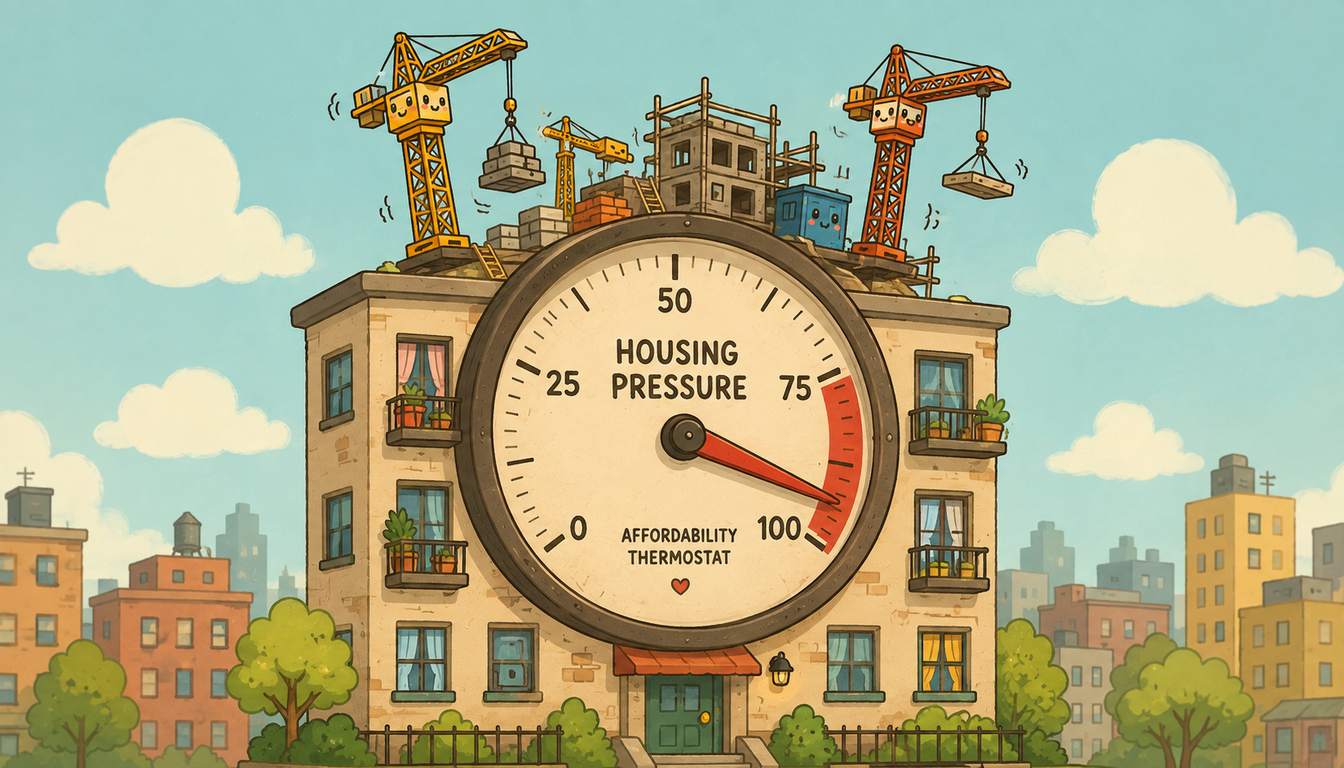

If your credit score has been holding you back from applying for affordable housing, you're not alone — and the good news is, it's probably holding you back less than you think. Millions of families with low credit scores are approved for housing assistance every year. Here's what you actually need to know before you apply.
The Short Answer: Yes, You Can
Bad credit does not stop you from applying for Section 8 or other housing assistance programs. The U.S. Department of Housing and Urban Development (HUD), which runs the Housing Choice Voucher Program (commonly called Section 8), does not require a credit check as part of your eligibility. Your local Public Housing Agency (PHA) decides who qualifies based on things like income, family size, and citizenship status — not your credit history.
This means your credit score cannot be used to disqualify you from getting on a waiting list or receiving a voucher. What matters most to the PHA is your household income compared to the median income in your area, which you can look up through HUD's income limits tool.
So Why Does Credit Still Come Up?
Here's where it gets a little confusing. Even though the government doesn't check your credit, individual landlords sometimes do. Once you have a voucher, you still need to find a landlord willing to accept it and rent you a unit. That landlord is allowed to run their own screening, which may include a credit check, income verification, or rental history review.
This is where a lot of applicants get stuck — not because they were denied the voucher, but because a private landlord turned them down afterward. The rules around this vary by state and city. Some places, including several counties and cities across the country, have passed laws limiting or banning credit checks for voucher holders specifically. Rules keep changing too, so it's worth checking with your local housing authority to see what protections apply where you live. You can find your local PHA using HUD's PHA contact directory.
How the Waiting List Process Works
Once you apply, your local PHA will place you on a waiting list if you qualify. Wait times vary a lot depending on where you live — some areas have lists that move in months, while others take years because demand is so high. This has nothing to do with your credit. It's based on funding, local housing supply, and how many people are ahead of you.
Many PHAs give priority to certain groups, such as people experiencing homelessness, veterans, seniors, or people with disabilities. If you fall into one of these categories, ask your PHA directly whether you qualify for priority status, since this can move you up the list faster than waiting your turn. You can find current wait list openings and status updates through your local PHA's website, which is also the safest place to check instead of relying on search results or social media posts.
What If You're Denied by a Landlord
Getting a voucher doesn't automatically guarantee a unit. If a landlord turns you down because of your credit, you do have options. First, ask for the specific reason in writing. Landlords are often required to give you this information, and it can help you figure out what to fix before your next application.
Second, check whether your state or city has source-of-income protection laws. These laws make it illegal for a landlord to refuse a tenant simply because they're using a housing voucher, and in some places, they also limit how much weight credit history can carry in the decision. Your PHA or a local legal aid office can tell you what protections apply in your area.
Third, keep looking. Not every landlord screens the same way, and many landlords who regularly work with voucher holders are used to flexible screening. Your PHA can often provide a list of landlords in your area who already accept vouchers, which saves you from having to convince a landlord from scratch.
Building Credit While You Wait
Since wait times can stretch on for a while in many areas, it's worth using that time to strengthen your credit so you're in a better position when a unit becomes available. A few habits that tend to help over time:
- Pay existing bills on time when possible, even small amounts, since payment history carries the most weight in your score
- Keep credit card balances low compared to your limit
- Avoid opening several new credit accounts at once
- Dispute any errors you find on your credit report directly with the credit bureau
- Consider a secured credit card or credit-builder loan if you're starting from a thin credit history
None of this is required to get approved for a voucher, but a stronger credit picture can open up more landlord options once you're ready to search for a unit.
What Landlords Actually Look At
If a landlord does check your credit, they're usually not looking for a perfect score. Most are trying to answer one simple question: can you pay your share of the rent on time? Because a voucher covers a large part of your monthly rent, your personal financial risk to the landlord is often lower than it would be for a renter without assistance. Some landlords take this into account and are more flexible with credit requirements than they would be otherwise.
A few things landlords may consider besides your credit score:
- Your income and proof you can cover your portion of rent
- Rental history, such as past evictions or unpaid rent
- Criminal background, depending on state and local law
- References from previous landlords
If you know your credit isn't strong, it can help to be upfront and offer context, like proof of steady income or a letter explaining past financial hardship.
Steps You Can Take to Improve Your Chances
You don't need perfect credit to get approved, but a few simple steps can make the process smoother.
1. Check your credit report for free. Before you apply anywhere, pull your credit report at AnnualCreditReport.com, the only site authorized by federal law to give you free reports from all three credit bureaus. Look for errors — mistakes on credit reports are common, and fixing them can raise your score.
2. Get free help from a HUD-approved counselor. HUD funds housing counseling agencies across the country that offer free or low-cost help with budgeting, credit repair, and understanding your rental options. You can find one near you through HUD's housing counselor search tool.
3. Gather proof of income and stability. Pay stubs, benefit letters, or a letter from your employer can help reassure a landlord even if your credit history isn't great.
4. Ask about alternative screening options. Some landlords and housing programs accept a letter of explanation for past credit issues, especially if they're tied to medical bills, job loss, or other hardship outside your control.
5. Apply to multiple PHAs if you're able. Waiting lists and screening standards vary a lot by area, so applying in more than one location can open up more opportunities.
Watch Out for Scams
If anyone asks you to pay a fee to "guarantee" a voucher or move you up a waiting list, it's a scam. Legitimate housing assistance programs never charge for applications or approval. Always apply directly through your official local PHA or HUD.gov, never through a third-party site asking for payment.
Common Questions
Will applying for Section 8 hurt my credit score? No. Applying for the Housing Choice Voucher Program is not a credit application, so it does not trigger a hard inquiry or affect your score.
Does a low credit score put me at the bottom of the waiting list? No. Waiting list position is based on when you applied and any priority categories you qualify for, not your credit.
Can a landlord ask for a minimum credit score for voucher holders? Landlords can set screening standards, but they generally have to apply the same standards to everyone, and many areas have laws limiting how credit can be used against voucher holders specifically. Check with your PHA or a local legal aid office for the rules where you live.
What if I have an eviction on my record? An eviction can make things harder with private landlords, but it doesn't automatically disqualify you from a voucher. Some PHAs and landlords will consider how long ago it happened and what led to it.
The Bottom Line
Bad credit feels like a bigger obstacle than it actually is when it comes to housing assistance. The federal program itself doesn't check your credit, and many landlords are more focused on your income and rental history than your score. The biggest thing you can do to improve your odds is stay organized: check your credit report, fix any errors, gather proof of income, and apply to your local PHA as soon as you're ready.
If you're in a time crunch and need help faster than a standard waiting list allows, take a look at our guide on how to apply for emergency Section 8 assistance for a step-by-step walkthrough.
This article is for general information only and isn't a substitute for guidance from your local Public Housing Agency or a HUD-approved housing counselor.
Navigating the Section 8 housing process can feel overwhelming, and that's where Section 8 Search comes in. We're more than just a listing website; we're a dedicated resource designed to make finding housing under the Housing Choice Voucher Program straightforward and stress-free. Our platform offers user-friendly tools to explore listings and waiting list statuses nationwide, all built on official HUD data. We're also passionate about providing clear, helpful information and guidance, empowering you with the knowledge you need to understand eligibility, complete your application, and confidently navigate your housing journey.