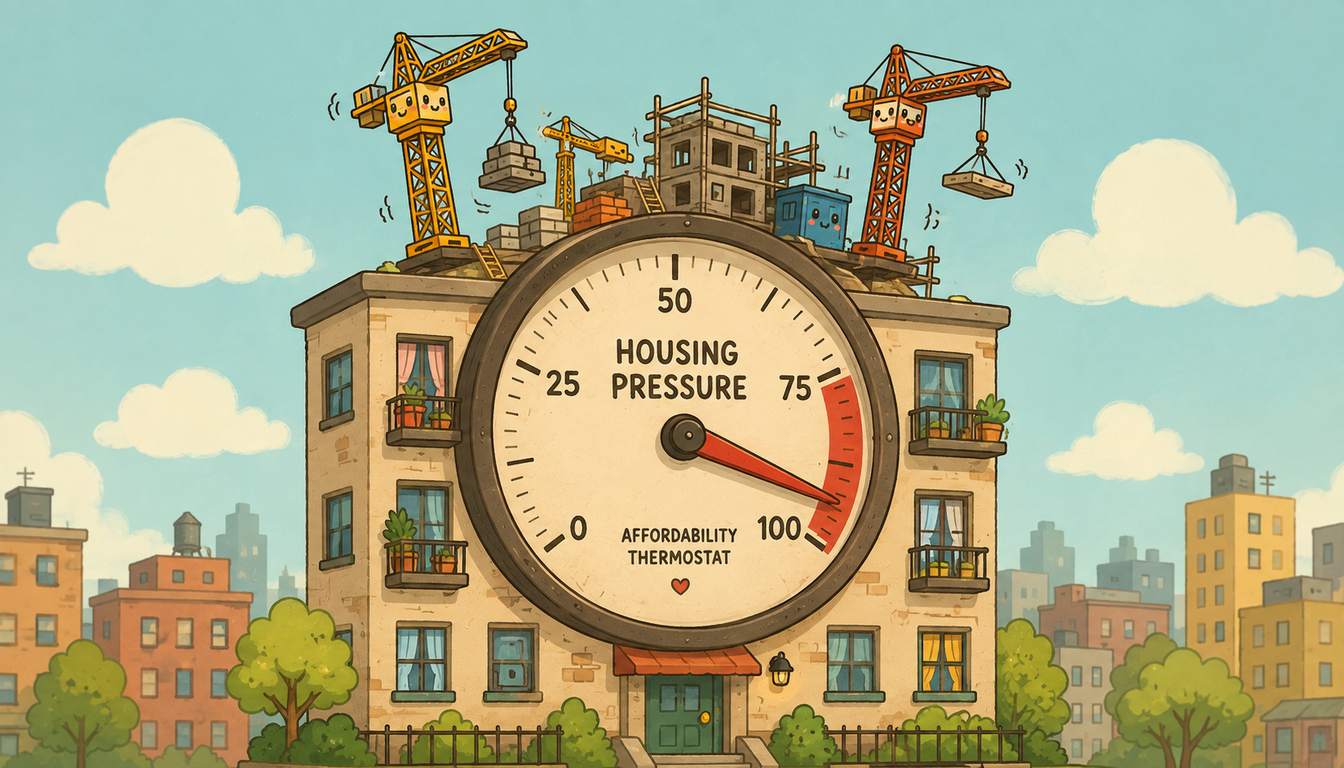

Affordable housing and Section 8 stayed in the headlines this week, with new laws, new lawsuits, and new buildings all making news across the country. Here's a roundup of what happened and what it means for renters, landlords, and anyone trying to make sense of the housing market right now.
A New Federal Housing Law Starts to Take Shape
The biggest housing news of the month is still settling in. The 21st Century ROAD to Housing Act became law on July 11 without President Trump's signature, and lawmakers are already calling it the most significant affordable housing legislation in decades. The law limits how many single-family homes big investment companies can buy, expands smaller mortgage options, and cuts red tape for building factory-made homes. We broke down what this means for renters and buyers in our own piece on the biggest housing bill Congress has passed in decades, which covers the law section by section.
Don't expect prices to drop overnight, though. A fresh homebuyer affordability report shows things actually got harder in June, marking the fifth month in a row that buying a home has gotten less affordable. The median home price hit $446,400, and a buyer now needs an income above $109,000 just to qualify for a typical mortgage. Experts say the new law should help over time by adding more homes to the market, but building takes years, not weeks.
Congress isn't stopping there. A new bill called the HOPE Act would add tax incentives for preserving affordable housing, aimed at getting older rental buildings fixed up instead of sold off or converted to market-rate units. The bill would let investors write off losses on these projects and offer a faster depreciation schedule, making it more attractive to fix up aging buildings rather than let them fall out of the affordable housing supply. Meanwhile, the new federal law is also reshaping how local banks work. Community banks, which fund a lot of local housing projects, are getting new rules and lending flexibility meant to help them grow and support more housing in their communities.
California Pushes Hard on Housing, in Court and in Sacramento
California made a lot of moves this week. Governor Newsom signed Assembly Bill 179, a state law meant to cut the cost of building affordable housing by up to $70,000 per unit by simplifying how the state hands out financing and reducing local fees that slow down construction. The bill signing happened at a housing site in Oakland, where the governor argued that California's housing shortage was created on purpose through years of red tape, and that the state now needs to rebuild its approach from scratch.
At the same time, the state is cracking down on cities that aren't doing their part. California filed lawsuits against five cities, Calexico, Costa Mesa, Half Moon Bay, Ridgecrest, and Turlock, for missing legal deadlines to plan for new housing. Every city in California has to show the state how it will make room for new homes at all income levels, and these five have been past their deadline for more than two years. The state wants a judge to force them to submit new plans within 120 days. Separately, Sacramento lawmakers have been working on a major housing bond measure that would send billions of dollars toward building and preserving affordable units and helping more Californians become homeowners, with voters expected to weigh in later this year.
Not all the California housing news is about new laws, though. A civil rights group filed a complaint accusing Greystar, the country's largest apartment landlord, of refusing to rent to tenants using Section 8 housing choice vouchers at dozens of its California properties, even though state law requires landlords to accept the vouchers. Investigators posing as renters recorded staff saying flatly that certain buildings don't take Section 8. On the flip side, a California landlord filed his own lawsuit going the other direction, arguing that forcing property owners to accept Section 8 vouchers violates the Fourth Amendment because the program requires landlords to submit to inspections. It's a legal fight that's already played out in New York, where an appeals court agreed with the landlord's side, so California's case is one to watch.
Vouchers, Waitlists, and New Buildings
In New York, Section 8 waitlists reopened at 27 buildings across the city for the first time since 2021. Households have until July 24 to apply, and about half the buildings are set aside for renters over age 62. Applicants must earn at or below 50 percent of the area's median income to qualify, and getting on a waitlist is still no guarantee of getting an apartment.
Out in Los Angeles, renters are watching a different kind of voucher story unfold. The city's Emergency Housing Vouchers for people exiting homelessness are running out of federal funding, and thousands of households have been told their rental help could end by the end of the year unless new money comes through. It's a reminder that housing choice vouchers, while powerful, depend entirely on Congress continuing to fund them.
New construction kept moving forward this week, too. In Texas, The NRP Group broke ground on a 336-unit affordable housing community near Austin, built for households earning between 30 and 70 percent of the area median income. And in Tampa, an old strip mall got a second life as 17 new affordable apartments for people experiencing or at risk of homelessness, funded through a mix of city dollars and a local nonprofit.
The Money Behind "Affordable" Isn't Always Enough
Not every affordable housing story this week was good news. A deep investigation out of Portland found that the country's biggest affordable housing tax credit program is producing rents that are barely cheaper than market rate, leaving thousands of "affordable" units sitting empty while lower-income renters still can't afford them. Economists have criticized the program for decades, arguing that rental vouchers would help more people for the same money, but the tax credit remains the backbone of U.S. housing policy anyway.
Rising costs are squeezing families on every front, not just rent. A new report shows food banks and affordable housing groups are both stretched thin as inflation eats into what low-income households can afford, forcing many to choose between rent and groceries. And one economist argues the real long-term fix is simpler than any new program: as older housing naturally loses value over time, it becomes cheaper on its own, meaning building more housing today is what keeps prices in check tomorrow.
Housing on the Ballot
Housing costs are also becoming a bigger factor in local elections. In the Kansas City area, voters heading to the polls this election cycle are being asked to weigh in on candidates whose positions on affordable housing and rental assistance could shape local policy for years to come, a sign that housing affordability is no longer just a big-city or coastal issue.
That's the roundup for this week. Between a new federal law taking effect, fresh lawsuits over Section 8 compliance, and communities breaking ground on new housing, the pressure to make housing more affordable is showing up everywhere, from Washington to city council meetings across the country.
Navigating the Section 8 housing process can feel overwhelming, and that's where Section 8 Search comes in. We're more than just a listing website; we're a dedicated resource designed to make finding housing under the Housing Choice Voucher Program straightforward and stress-free. Our platform offers user-friendly tools to explore listings and waiting list statuses nationwide, all built on official HUD data. We're also passionate about providing clear, helpful information and guidance, empowering you with the knowledge you need to understand eligibility, complete your application, and confidently navigate your housing journey.