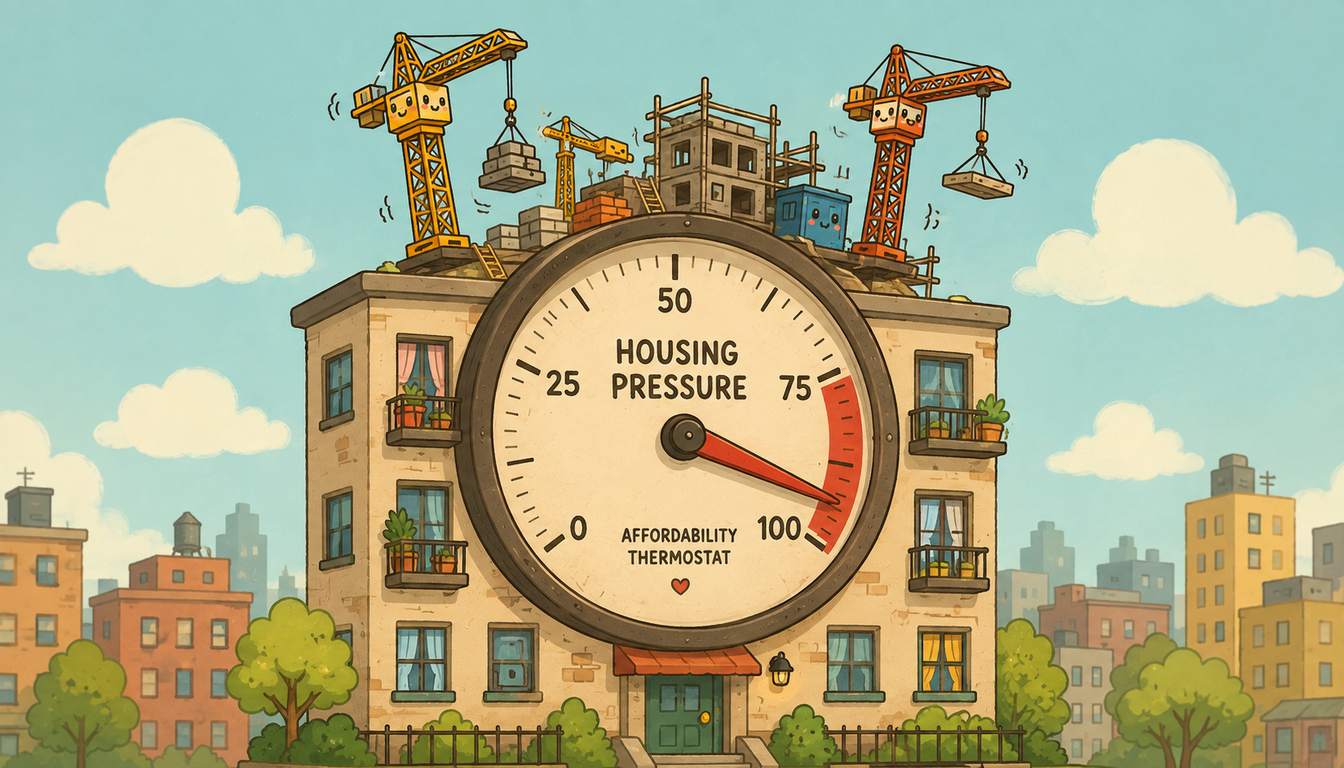

Affordable housing was in the spotlight across the country this week. New federal housing rules are beginning to take shape, states are putting millions of dollars into new homes, and communities are trying different ways to increase the supply of housing people can afford.
There were also important developments for people who use Section 8 and Housing Choice Vouchers. In Portland, thousands of voucher holders could have to pay a larger share of their income toward rent. In Long Beach, nearly 500 households using Emergency Housing Vouchers received welcome news after officials found a way to keep their rental assistance in place.
Here are the affordable housing and Section 8 stories to know this week.
New Federal Housing Law Could Change How Communities Build Affordable Housing
One of the biggest housing stories continues to be the 21st Century ROAD to Housing Act, which became law in July.
Wisconsin housing experts say the new federal affordable housing law could help address housing shortages through changes affecting construction, home repairs, manufactured housing, financing, and other parts of the housing system.
The National League of Cities is also helping local governments understand how they can use the law. Its guidance on local affordable housing opportunities under the ROAD to Housing Act explains how cities may be able to use the new programs and rules to support local housing goals.
One important point is that many changes will not happen immediately. Federal agencies still have to put parts of the law into practice, and some programs will depend on future funding.
Manufactured housing could also benefit. Changes included in the law are designed to make it easier to build and finance more types of factory-built homes. That could give communities another way to add lower-cost homes more quickly.
For renters and families looking for affordable housing, the real question will be how quickly these federal changes result in new homes at the local level.
Florida Report Shows a Severe Shortage for the Lowest-Income Renters
Florida continues to show how serious the affordable housing shortage can become when rents rise faster than many household incomes.
The Florida Housing Coalition's Home Matters 2026 report found that there are only 25 available and affordable rental units for every 100 extremely low-income renters. The Florida affordable housing report looks at rental availability, home prices, homelessness, housing costs, and the overall supply of affordable homes.
For very low-income renters, simply adding market-rate apartments may not solve the problem. These households often need deeply affordable units, rental assistance, or Housing Choice Vouchers to make rent manageable.
The findings are especially important in a state where many communities have seen rapid increases in housing costs.
Colorado Invests $13.9 Million in Affordable Housing
Colorado is using its Proposition 123 Land Banking program to help communities secure land for future affordable housing.
The state announced nearly $14 million for affordable housing projects in eight communities. The projects are expected to support about 535 rental and homeownership units, including housing in rural and mountain communities.
Projects include 98 rental homes in Pueblo, 18 homes for sale in Cripple Creek, 27 homes in Durango, and 44 rental units in Leadville.
Another Colorado development also moved forward this week. The NHP Foundation closed financing for 52 new affordable apartments in Frisco, where housing costs can make it difficult for local workers to live near their jobs.
The Bella will include studio, 1-bedroom, and 2-bedroom apartments for households at different income levels.
Churches and Local Governments Turn Available Land Into Housing
Some communities are looking at land they already have as a way to create more affordable housing.
Near Holland, Michigan, Calvary Church and Lakeshore Habitat for Humanity are planning affordable homes on church-owned property. Lakeshore Habitat plans to build 17 affordable owner-occupied homes, while the church plans additional transitional housing with local partners.
Dalton, Georgia, is trying another approach.
The Dalton-Whitfield Land Bank Authority donated a 1.3-acre property for an affordable housing pocket neighborhood. Plans call for small 1-, 2-, and 3-bedroom cottage-style homes around a shared courtyard.
Local officials hope the pilot can show developers that smaller homes and different neighborhood designs can help create more affordable homeownership opportunities.
Cleveland Connects Affordable Housing With Jobs
Cleveland is taking a broader approach to its housing problems.
Instead of treating housing as a separate issue, city leaders are connecting new housing with jobs, vacant land, transportation, and neighborhood investment.
A Cleveland housing and redevelopment initiative is using vacant industrial properties to attract employers while encouraging new housing development nearby.
The city's Site Readiness for Good Jobs Fund has raised more than $80 million to put unused property back into productive use. Cleveland is also reducing some permit fees and using other incentives to encourage housing construction.
One company moving into a former industrial property will manufacture modular homes and is expected to create more than 150 jobs.
The strategy shows how affordable housing can be connected to another basic issue: whether residents earn enough to pay for the homes available in their communities.
California and New York Add More Affordable Homes
New construction is also moving forward in some of the country's most expensive housing markets.
In California's Silicon Valley, developers broke ground on a 75-unit affordable housing development in Milpitas. The project is expected to be completed in 2028 and is supported by Low-Income Housing Tax Credits and tax-exempt bonds.
New York, meanwhile, celebrated the completion of Matinecock Court in Suffolk County. The development provides 145 affordable homes on Long Island, including homes for veterans and people with disabilities.
The homes are available to qualifying households earning up to 80% of the Area Median Income.
In the Bronx, New York also completed 83 affordable and supportive apartments for seniors. Fifty apartments are reserved for formerly homeless older adults and include access to on-site services.
These projects show how affordable housing programs can serve different groups, including families, seniors, veterans, people with disabilities, and people who have experienced homelessness.
Massachusetts Announces More Than 2,500 New Homes
Massachusetts announced one of the largest affordable housing investments of the week.
Governor Maura Healey announced $278 million in state and federal financing and tax credits to support more than 2,500 new homes across Massachusetts.
The funding covers 29 developments in 20 communities.
Two projects in Cambridge alone will create 162 permanently affordable homes. The developments will serve families and older adults, with construction expected to begin in 2027.
The Massachusetts announcement is another example of how federal Low-Income Housing Tax Credits, state funding, and local housing programs are often combined to make affordable developments possible.
More Affordable Housing Deals Are Moving Forward Through LIHTC
The Low-Income Housing Tax Credit, or LIHTC, is one of the country's most important tools for financing affordable rental housing.
Recent federal changes increased the amount of housing credits available and made it easier for some developments financed with bonds to qualify.
As a result, the LIHTC affordable housing market is seeing more new deals.
That could eventually mean more affordable apartments. However, there is a short-term challenge: more projects are now competing for investment money.
The expansion is still an important development because LIHTC financing is behind many of the affordable housing projects being built across the country.
Portland Section 8 Voucher Holders Could Pay More Toward Rent
Not all of this week's news was positive for renters.
Home Forward, the housing authority serving Portland, Oregon, is facing an estimated $31 million budget gap. To help address it, the agency plans to increase the portion of rent paid by many residents and voucher holders.
Around 12,356 households could be affected by the proposed rent changes for Housing Choice Voucher holders.
For example, a household currently paying about 28% of its income toward rent could eventually pay around 31%.
The exact amounts and dates have not been finalized, but the changes would begin no earlier than February 1, 2027. Residents are expected to receive notice before their individual payment changes.
For families living on limited incomes, even a relatively small increase in their required rent contribution can affect money available for groceries, transportation, utilities, and other basic needs.
Long Beach Finds a Lifeline for Nearly 500 Emergency Housing Voucher Households
There was much better news for Emergency Housing Voucher households in Long Beach, California.
Officials had warned that funding for the city's Emergency Housing Voucher program could run out, putting hundreds of formerly homeless residents at risk of losing assistance.
This week, officials announced that they had secured enough funding to protect nearly 500 households using Emergency Housing Vouchers.
The city now expects to have enough time and funding to transition the approximately 480 affected households into other rental assistance programs by November.
The development is important because Emergency Housing Vouchers were created to help people who were homeless, at risk of homelessness, or facing other serious housing emergencies.
If you are dealing with an urgent housing situation, it can also help to understand how to apply for emergency Section 8 housing assistance, including where to look for help and what steps you may need to take.
Emergency assistance is not guaranteed, and programs vary by location, so households should always check directly with their local housing office.
Section 8 Voucher Protections Face a Legal Test in New York
Another major Section 8 story is developing in New York.
State law generally prevents landlords from rejecting an applicant simply because the person uses a Housing Choice Voucher or another legal source of income. But landlords have challenged those protections in court.
A legal challenge involving Section 8 source-of-income protections could have effects beyond New York.
Similar arguments have appeared in cases in other states.
For voucher holders, these protections can be very important. Receiving a Section 8 voucher does not automatically mean a household will find a landlord willing to rent to them. Local and state source-of-income protections can make it harder for landlords to reject applicants only because they use rental assistance.
The New York case is still developing, so voucher holders should continue checking current rules in their area.
Communities Use Redevelopment Tools to Protect and Create Affordable Housing
Local governments are also changing the way they use redevelopment programs.
Kalamazoo County, Michigan, approved public financing connected to a large 444-unit affordable housing development in Oshtemo Township. The proposed project would include both rental and homeownership housing along with commercial space.
Omaha, Nebraska, took a different approach. The City Council approved a new affordable housing protection policy for TIF redevelopment projects. The policy creates a "no net loss" requirement intended to prevent redevelopment projects receiving tax increment financing from reducing the city's affordable housing supply.
Both stories show how local financing and redevelopment rules can affect whether communities gain or lose affordable homes.
HUD Changes Affordable Housing and Fair Housing Guidance
HUD also announced a policy change this week.
The department said it is changing how the Fair Housing Act's time limits apply to claims involving certain building design and construction requirements.
HUD says its new affordable housing and Fair Housing guidance is intended to reduce costs and remove rules that it believes increase the expense of building and renting homes.
The administration says reducing these costs could help housing affordability. Fair housing and disability advocates will also be watching how changes to enforcement affect residents who depend on accessibility requirements.
Housing Affordability Remains Difficult for Future Homebuyers
People waiting for home prices and borrowing costs to fall sharply may need to be patient.
Current forecasts suggest homebuying may remain expensive in 2027, especially if mortgage rates stay elevated.
Forecasts cited by CNBC put average 30-year mortgage rates around 6.7% in 2027. High borrowing costs can keep monthly payments out of reach even when home prices stop rising quickly.
That matters for affordable housing because households that cannot move into homeownership often remain renters longer. In markets where rental housing is already limited, that can add more pressure to the rental market.
What This Week's Affordable Housing News Means for Renters
This week's stories show that there is no single solution to America's housing shortage.
Some communities are building new apartments. Others are turning vacant land, old industrial properties, or church-owned property into housing. States are using tax credits and land programs. Congress has changed federal housing law. Local governments are experimenting with zoning, redevelopment financing, and new housing designs.
For Section 8 and Housing Choice Voucher households, however, the most immediate issues are often much more personal: how much rent they must pay, whether landlords will accept their voucher, and whether assistance will continue.
The Long Beach Emergency Housing Voucher announcement shows how funding decisions can directly protect hundreds of households. Portland's planned rent contribution increase shows the opposite side of the issue: changes in housing authority finances can quickly affect a family's monthly budget.
At the same time, the projects moving forward in Colorado, California, Massachusetts, Michigan, Georgia, and New York could gradually increase the number of affordable homes available.
More housing is being planned and built, but demand remains high. For families searching for affordable housing or Section 8 assistance now, it remains important to follow local housing office announcements, check waiting list openings, and respond quickly when housing opportunities become available.
Navigating the Section 8 housing process can feel overwhelming, and that's where Section 8 Search comes in. We're more than just a listing website; we're a dedicated resource designed to make finding housing under the Housing Choice Voucher Program straightforward and stress-free. Our platform offers user-friendly tools to explore listings and waiting list statuses nationwide, all built on official HUD data. We're also passionate about providing clear, helpful information and guidance, empowering you with the knowledge you need to understand eligibility, complete your application, and confidently navigate your housing journey.