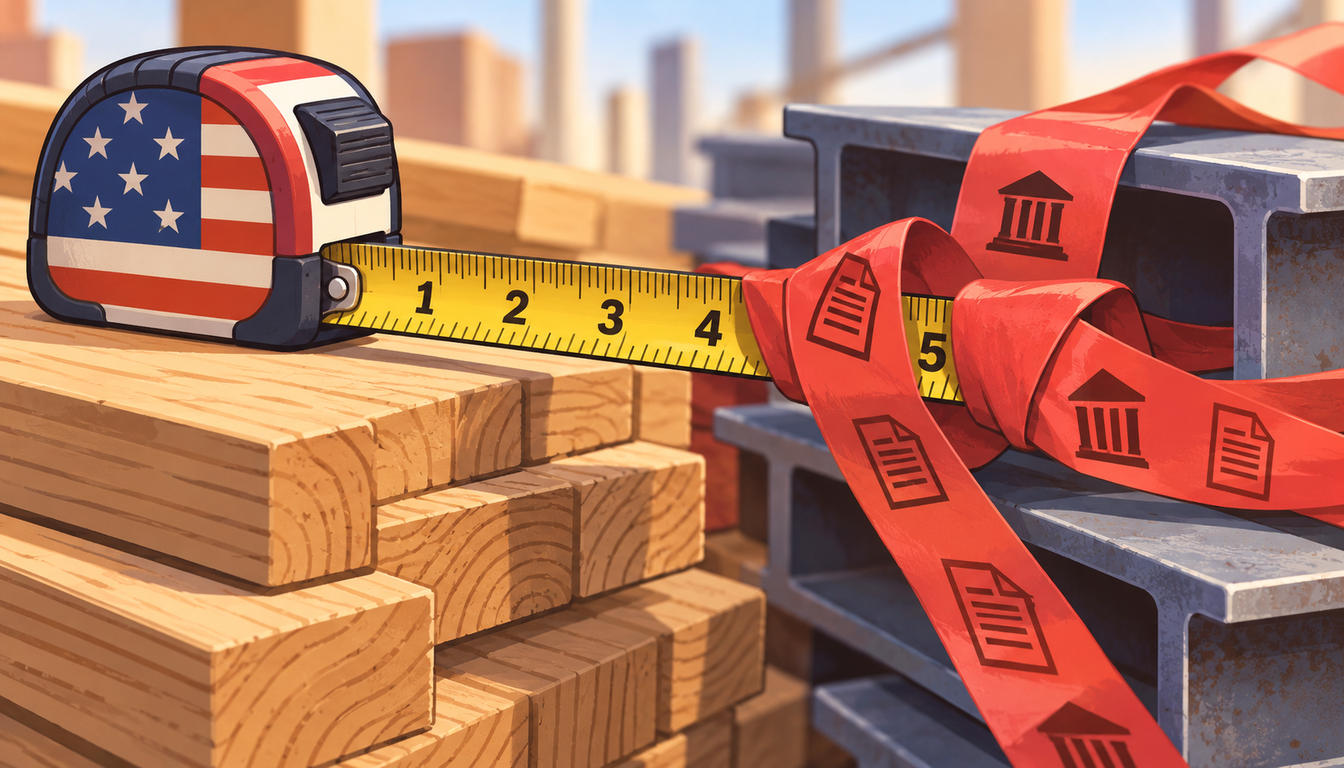
If you're waiting for a Section 8 voucher or searching for an affordable apartment, you already know how long the wait can be. Now there's another reason new affordable homes are taking longer to get built: a federal rule that requires construction materials to be made in the United States.
The rule is called Build America, Buy America (BABA). It sounds simple — use American-made steel, pipes, and equipment on projects that get federal money. But for housing developers, it's turning into one more roadblock in a country that already doesn't have enough affordable homes.
What Is the Build America, Buy America Rule?
Congress passed BABA in 2021 as part of a larger infrastructure law. The goal was to support American factories and workers by requiring that iron, steel, and other materials used on federally funded projects come from U.S. manufacturers, according to the U.S. Department of Housing and Urban Development. The rule was written with roads and bridges in mind.
But the rule also applies to affordable housing projects that receive certain federal funds, such as HOME dollars or the Housing Trust Fund. Developers who use this money must show that 95% of their materials are made in the U.S.
That may sound reasonable for a highway project, which only needs a few hundred different materials. A single apartment building, though, can require thousands of individual parts — everything from door hinges to elevators to heating systems. Builders now have to track down and confirm the origin of nearly every one, according to NPR's reporting on the issue.
Real Projects Are Stuck Because of This Rule
NPR spoke with developers who are watching their affordable housing projects sit unfinished because of BABA.
In Biddeford, Maine, a nonprofit developer named Tyler Norod planned to build several dozen affordable apartments on an empty lot in a former mill town that's been working to rebuild itself. The project should already be under construction. Instead, the lot remains empty, and Norod says the earliest he expects to break ground is sometime in 2027 — over a year later than planned.
In Portland, Maine, developer Laura Reading ran into a different problem. She's building affordable apartments with an on-site childcare center, but the project stalled because her team couldn't find an American-made heating and air conditioning system that met the requirement. She eventually tracked down a compliant option, but the search alone cost her project valuable time.
Some products, like certain elevator parts and specialized door hardware, simply aren't manufactured in the U.S. at all. That leaves developers stuck searching for rare substitutes or waiting months for a paperwork exception, all while construction costs keep climbing and financing deadlines tied to tax credits keep approaching.
This kind of delay adds up. According to Jennifer Schwartz of the National Council of State Housing Agencies, some developers have decided the federal funding isn't worth the trouble anymore and are walking away from grants they would have otherwise used to build affordable units.
Why Sourcing American-Made Materials Is So Hard
Housing construction is more complicated than road construction when it comes to materials. A highway project mostly needs concrete, asphalt, and steel — items that are widely produced in the U.S. An apartment building needs thousands of manufactured components, many of which are specialty items built overseas because there's no large domestic supplier.
For every part that isn't available domestically, a developer has to prove it, document it, and often request a formal waiver. Each of those steps takes time and paperwork, and many small nonprofit developers don't have large legal or compliance teams to handle it.
Are There Any Exceptions to the Rule?
Yes. HUD has the power to issue waivers when a required material isn't available in the U.S., when using domestic materials would cost more than 25% extra, or when following the rule isn't in the public's best interest. You can see current and past waivers listed on HUD's Build America, Buy America page and on MadeInAmerica.gov, the federal government's central tracker for these decisions.
The catch is that getting a waiver approved takes time — time that many affordable housing developers, working against tight tax-credit and financing deadlines, don't have. In 2026, HUD opened a public comment period asking builders and manufacturers for feedback on which materials are hardest to source domestically. That's a sign federal officials know the waiver process needs work, even if a fix hasn't arrived yet.
Why This Matters for Renters and Voucher Holders
The U.S. is short an estimated 7 million homes that are affordable to renters at or below the poverty line, according to the NPR report. Every delayed project means fewer homes for families who are already waiting on housing assistance.
For people using Section 8 vouchers, this shortage is felt directly. Fewer new affordable units means longer waitlists, fewer choices, and more competition for the units that do exist. When a nonprofit developer spends an extra year sourcing a compliant HVAC system instead of building, that's a year fewer apartments are available to voucher holders in that community.
What Happens Next
Housing advocates are pushing HUD to speed up the waiver process or create simpler rules for housing projects, separate from roads and bridges. Whether that happens depends on how HUD responds to the feedback it has been collecting from developers and manufacturers across the country.
In the meantime, developers like Norod and Reading are left waiting, and so are the families hoping to move into the apartments they're trying to build.
What This Means If You're Searching for Affordable Housing
Construction delays like these are one more reason it's smart to stay proactive while you search for housing help:
- Apply to multiple affordable housing waitlists in your area, not just one
- Keep your application information updated so you don't lose your place in line
- Check in regularly with your local Public Housing Authority for updates on new units
- Ask about other rental assistance programs while you wait, in case a voucher takes longer than expected
- Watch for new developments in your area, since some may open waitlists before construction is even finished
If you're already approved for help but need housing fast, you don't have to wait for new construction to catch up. Read our guide on how to apply for emergency Section 8 assistance for a step-by-step look at getting help sooner.
The Bottom Line
A law meant to support American manufacturing is having an unintended side effect: it's slowing down the very affordable housing developments that families need right now. With millions of households already struggling to find homes they can afford, every delayed project makes the wait longer.
Rules like this can change without much warning, and new waivers or updates could speed things up in the months ahead. We'll keep following this story and others that affect affordable housing across the country, so check back with Section8Search.org for the latest updates.
Navigating the Section 8 housing process can feel overwhelming, and that's where Section 8 Search comes in. We're more than just a listing website; we're a dedicated resource designed to make finding housing under the Housing Choice Voucher Program straightforward and stress-free. Our platform offers user-friendly tools to explore listings and waiting list statuses nationwide, all built on official HUD data. We're also passionate about providing clear, helpful information and guidance, empowering you with the knowledge you need to understand eligibility, complete your application, and confidently navigate your housing journey.